

No, it is not what you think. It is not going to be another handset. Here is my discernment about the future of this technology and its competition.
Before the iPhone 6 was launched we were discussing about what the next iPhone will be. One quips about the Apple Pay. It is either going to be a replacement to credit card or just a wiser option on a cashless transaction. Of course, we knew about it already. Besides, digital currency like Bitcoin is very much alive. I have also seen some people using Apple Pay when I shopped in a store in Great Mall in Milpitas, California. In the midst, I butt in saying that Apple should be looking at the potential of AR and VR if they want to stay in the loop. Otherwise, they are going to be the next Nokia. Nokia with lots and lots of cash. Everyone was silenced.
Let me briefly educate you about AR and VR. According to Wikipedia, “AR or Augmented Reality is a live direct or indirect view of a physical, real-world environment whose elements are supplemented by computer-generated sensory input such as sound, video, graphics or GPS data.” On the other hand, “VR or Virtual Reality replaces the real world with a stimulated one. It refers to computer technologies that generate realistic images, sounds, and other sensations that replicate a real environment or create an imaginary setting.”
Many of us probably have already seen or experienced AR. A popular example is Pokemon Go. The creator of Pokemon Go has successfully brought the innovation to the mainstream. What comes next is the interest of the investors who believe in technology as both business and game changing initiatives. By contrast, VR may simply be understood to many Android users as similar to the GearVR experience. I have seen the future!
In University of the Philippines-Technology Management Center, we had an elective called Technology Forecasting and Assessment. Honestly, I cannot remember what I have all learned from that subject. I only remember the use of probability and other mathematical formulas. Let me get back to you on this subject next time. I need a refresher.
My first mobile phone was a Motorola Microtac. I bought it in 1994. During that time, I also had a Motorola pager (or beeper) with a 4-liner screen. I found my mobile phone as an expense and my beeper as a worth investment. In 1997, I bought a Nokia 5110 with yellow casing. I was amazed that you can do both call and text in one device. It was the beginning of my Nokia experience. I also tried the Ericsson P900 Symbian OS-based smartphone. Ten years later, Apple’s iPhone was released. I got mine the same year 2007. Steve Jobs was right when he said that all mobile phones will look like iPhone. It happened.
Moving forward. It is now 2017 and I am still using an iPhone. I have not seen a major change in the physical handset. Not even its Android phone competitors. Either you will convince yourself that you need a bigger phone or just right your palm can keep. All of those are app-based. Moreover, you need or you don’t need the wireless earphone. Or yet, intro the GearVR headset for Samsung.
But who are silently working on the future of smartphones?
Here is my own version of forecasting and assessment from probability to mathematical formulas to event situation to learning the news and updates in Silicon Valley to reading the biographies of those tech moguls to asking why those venture capitalists and Wall Street wolves bet in the future of technologies. You may call it a speculation or hallucination. What about my blog on February 18, 2007 about the digital brand campaign which I saw would become the next wave in marketing, and the new way of launching a product is by building digital partnership with clients? What about the Internet competing with local TV networks in advertising? Imagine what I perceived ten years ago? All of those are already happening.
Company number 1 is Facebook. Obviously, Facebook wants to get inside your brain. It is like the habit of ingress and egress of your life in a day. Can you literally relate? Facebook is seriously working on the VR technology and wants to stay out of the digitally conventional (if I may own this term) mobile phone industry. I mentioned that Facebook is going to live in your brain and you will allow it to transcribe or type and be projected into your eyes. Believe it or not. It is part of the road map of Zuck.

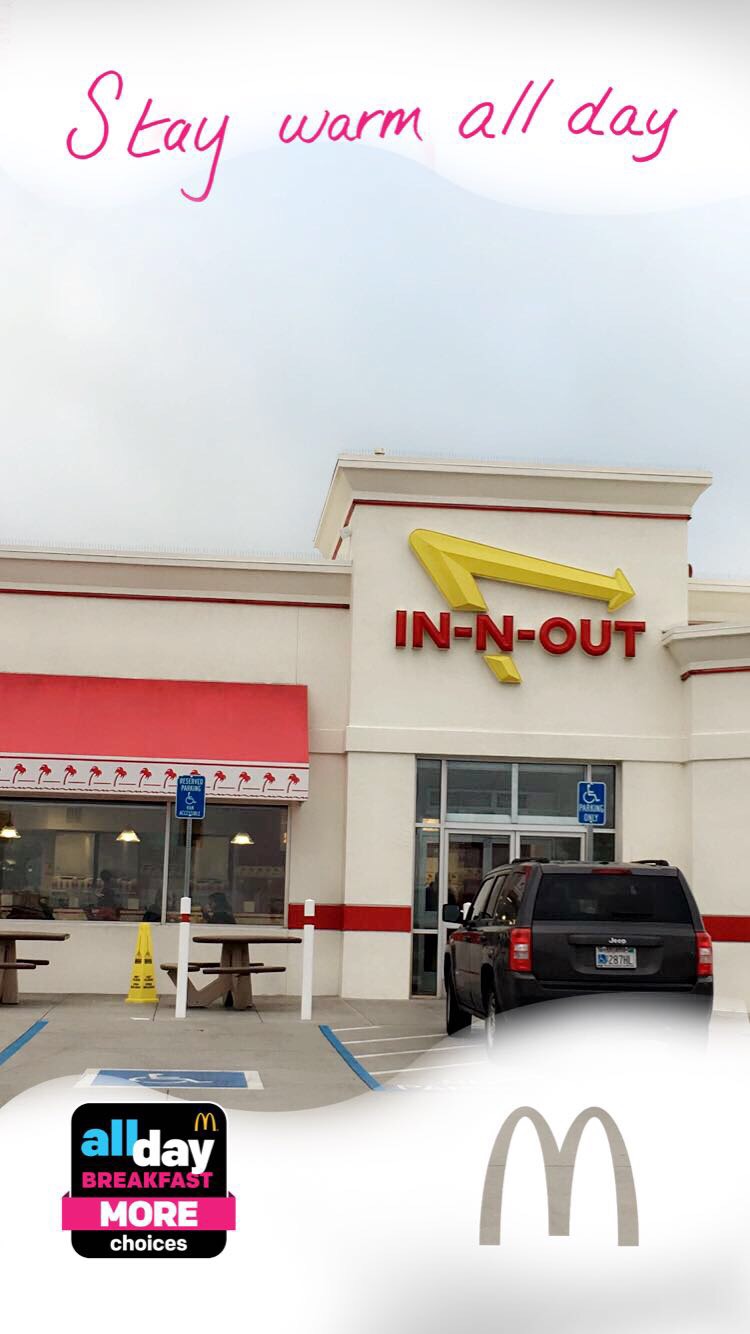
Company number 2 is Snap. The company’s front row is a revolutionary social media called Snapchat. It is different when you use Snapchat in the U.S. Snapchat stickers or filters may be boring to some countries. Perhaps, it is one of the reasons why some Snapchat users are migrating to Instagram stories. It still needs to be more aggressive and globally present to gain sponsors and advertisers. Nevertheless, it is still much cooler to use. My personal experience in Starbucks, Barnes and Nobles, In-N-Out (with McDonald’s sticker somewhere in Kettleman City, California ) and others shows that these sponsors and advertisers play differently in this ad competition. Snapchat brings AR to another dimension. Not a lot of people had the knowledge that they are already experiencing augmented reality when using Snapchat. What is interesting about Snap is the vision. Aside from the bio of Evan Spiegel being one of the youngest billionaires with Miranda Kerr supporting his dreams and the silent tech enabling unicorn co-founder Bobby Murphy, Snap is not just Snapchat. Many people have not heard or read about Spectacles yet. Spectacles are smartglasses developed to do image messaging and other functions.
So why do those VCs and Wall Street have confidence in Snap Inc. pitch for the IPO? It is because the company is not just Snapchat as most of us think. Its Spectacles is only the beginning. Snap is a camera company. I can also see that perceiving to be a camera company is an understatement. Perhaps the pitch is the same road map that Facebook has — to become the future phones or phone companies. Those guys in Silicon Valley and Wall Street would know more than we do. Mobile phones will turn into a vintage collection just like my old Motorola 4-liner pager and Nokia phone.

The future of smartphone is VR and AR. Not the familiar physical smartphone or mobile phone. The competition will be between Facebook (with its Oculus) and Snap (with its Spectacles). And if Apple wants to catch up with the AR and VR technologies, they can use their billions of dollars to acquire any of them (which I doubt, apparently). Meanwhile, Google is surely piloting new products and technologies. Remember the Google Glass? It may resurrect somehow sometime.
 RONALD LUCERO
0 comments on “How do you imagine the future of smartphones? Here is my piece and how I discern it to be…”